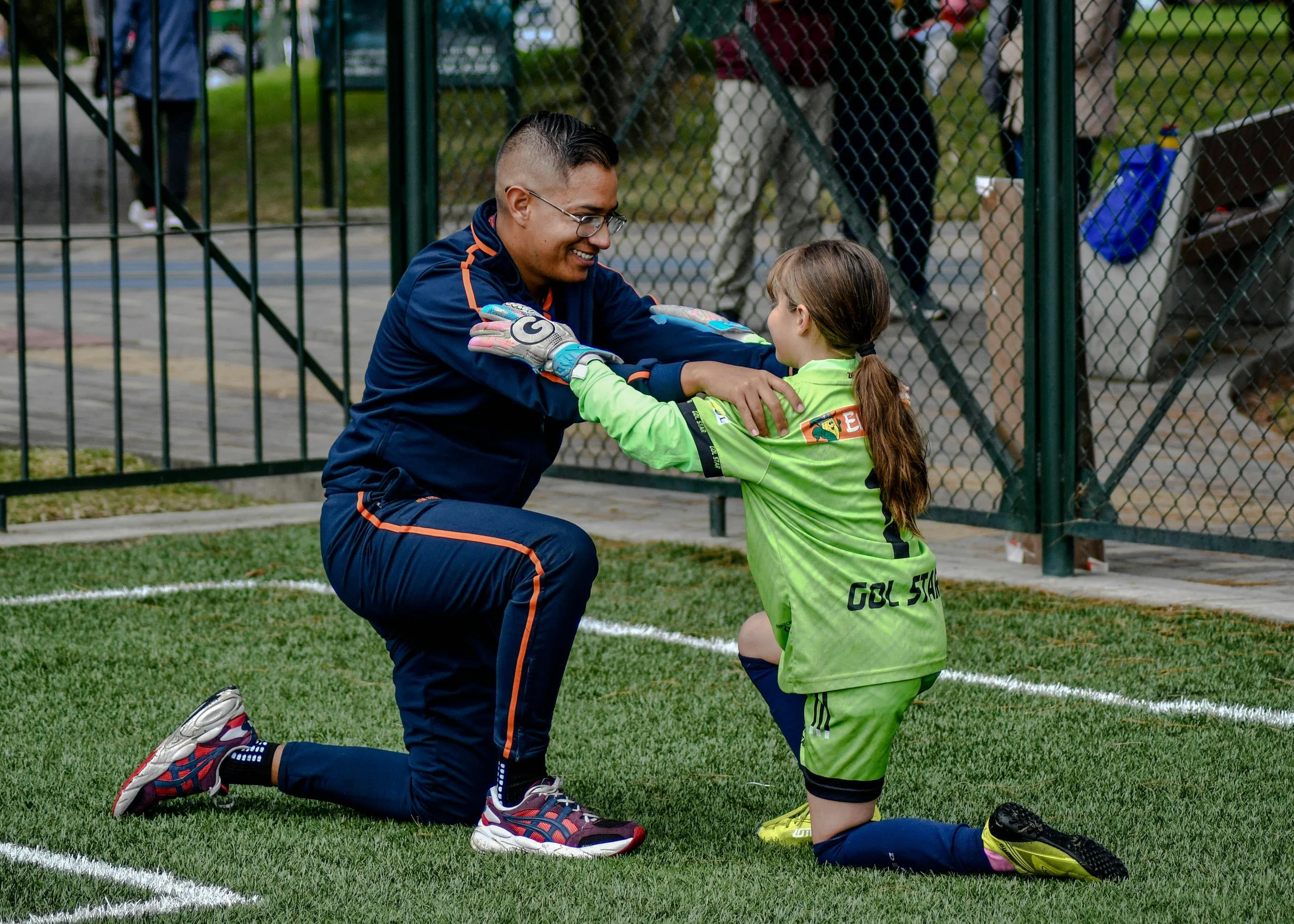
Confidence in soccer is the belief that you can handle what the game throws at you: a mistake, a goal against, a defender you can't get past. It isn't something players are born with. It's built through preparation, the way a player talks to themselves, and how they respond to setbacks, and parents can help or hurt that process more than they realize.
This guide covers what a confident player looks like, how players build confidence on their own, what to do when it drops during a slump, and what parents can do from the sideline and at home.
This post is part of our guide to the mental side of soccer.
What a confident player looks like
A common assumption is that the confident player is the one scoring goals. Scoring is easy to feel good about when your team has momentum. The real test is what happens when the other team takes control, or when a defender has figured you out.
A confident player:
Stays composed after a mistake or a goal against, because they believe the team can turn it around.
Keeps asking for the ball, including in tight spaces and late in close games.
Takes smart, calculated risks. That doesn't mean trying to beat three defenders. It means dribbling at the defense to draw players in, then playing the pass into the space that opens up.
Shows it in their body language: head up, talking, supporting teammates whatever the score.
That last point matters more than most players think. College coaches regularly name attitude as one of the clearest signs of a high-level player, and it's visible from the stands. A player who drops their head after a misplaced pass sends a message to their teammates and to anyone evaluating them.
Confidence is a skill you can train
Plenty of players believe confidence is a personality trait: you have it or you don't. That isn't how it works. Confidence can be built like any other part of your game, and there are three ways to do it.
1. Build proof through work
The most reliable source of confidence is evidence that you've improved. Set a specific goal and track it. For example, 300 extra touches a day outside team training adds up to roughly 9,000 extra touches in a month. When you look back at that, you know you've done the work, and that knowledge travels with you onto the field. Once you hit one goal, set a slightly harder one.
2. Change how you talk to yourself
What players say to themselves shapes what they expect to happen. If the voice in your head says "don't mess this up," that's what you focus on.
One method we use with players is doorway affirmations: every time you walk through a doorway, say one positive, specific thing about yourself, such as "I win my duels" or "I want the ball under pressure." Another is a short list of affirmations taped to the bathroom mirror and read every morning. Both feel small. Repeated hundreds of times, they change the default script.
3. Use your body language on purpose
Body language works in both directions. Standing tall, clapping for a teammate's effort, and moving with intent after a mistake tells your own mind that things are under control. It also lifts the players around you. When a teammate makes a good run and your pass doesn't connect, a quick "next one" does far more for both of you than throwing your arms up.
When confidence drops: dealing with a slump
Every player hits stretches where touches that used to be automatic suddenly need conscious thought. That's a slump, and the scary part is usually the question underneath it: am I losing my ability? Almost always, the answer is no.
A slump is usually a confidence and attention problem sitting on top of normal ups and downs in performance. One or two bad games plant doubt. Doubt leads to overthinking skills that should run on instinct. Overthinking makes those skills worse, which confirms the doubt. It's a loop, not a decline.
Common triggers include:
A growth spurt that throws off timing and coordination for a while.
A new position or role that asks for different instincts.
Small mistakes piling up and feeling bigger than they are.
Stress from school, family or friends spilling into soccer.
Fatigue from an overloaded schedule.
Naming the likely cause often takes some of the fear out of it.
The instinct during a slump is to grind harder: extra reps, extra film, more pressure. That usually deepens the loop. Three things work better:
Go simpler, not harder. For a few sessions or games, make the easy decision on purpose and rebuild trust in the basics before adding risk back in.
Separate the slump from who you are. After each session, write down three things that went right, even small ones like a clean first touch or a good recovery run.
Measure effort, not outcomes. Rate yourself on whether you competed, stayed engaged and recovered after mistakes, not on goals and assists.
Most slumps ease within a few weeks once the cause is addressed. If one lasts much longer, look harder at what's driving it, including whether fatigue or burnout is part of the picture.
What parents can do
Parents have a lot of influence over a player's confidence, mostly through what they choose to praise.
Praise the behavior as well as the result. Notice when your player keeps their head up after a goal against, keeps communicating when the team is losing, or tries something smart that doesn't come off. Rewarding only goals and wins teaches a player that confidence depends on outcomes.
Recognize learning. If your player makes a mistake early and handles the same situation better later in the game, say so. That's real mental strength.
Don't keep naming a slump. Repeating "you're in a slump" reinforces the story your player is already fighting.
Don't rush to add training. Before booking extra sessions or a private coach, understand what's behind the drop. Sometimes the player needs less, not more.
Keep home steady. A calm environment after games often does more than any technical fix.
It also helps to avoid comparisons with teammates. If that's already a habit, our post on what to do when your athlete compares themselves to teammates has practical steps.
Building confidence that lasts
Confidence built on goals and wins disappears with the first bad week. Confidence built on preparation, a better inner voice and a steady way of handling mistakes holds up when the game gets harder, which it will at every new level.
This is a big part of what we work on with players at Beyond Goals: the habits and self-talk that keep them composed when things go wrong. If your player's confidence has taken a hit, book an intro session and we can talk about where they are and what would help.
Frequently Asked Questions
-
Yes. Confidence comes from preparation, self-talk and how a player handles setbacks, and all three can be practiced. Players who seem naturally confident usually built it through habits.
-
It varies, but most ease within a few weeks once the cause is addressed. If a slump lasts much longer, look closer at what's driving it, whether physical, mental or situational.
-
Sometimes. A few days off or a stretch of lower-pressure training can help more than pushing through, especially if fatigue is part of the cause. It depends on what's behind the slump.
-
No. Slumps happen at every level, including professional soccer. They're usually a temporary confidence and attention pattern, not a limit on talent.